Provided Services
Detta är exempeltext. Ex quis mundi adipisci qui. Mutat cetero utroque eam an, at vix ludus epicurei. Eius audiam id vel, vel dolor scriptorem ut. Saperet convenire ne sea, ut tota omnes sadipscing vim, sit dicta splendide intellegam ad. Consul verterem conceptam pri et. Sea te melius perfecto maiestatis, duo ad modus euismod pertinacia. Cu verear molestiae sed, soluta torquatos ex mei.
Efficient and Fast
Since the 1970s, the load on standard concrete piles has increased from 600 kN to over 1100 kN today. This improvement has been made possible through the control of the driving process and the verification of bearing capacity using dynamic impact testing. Unlike static load tests, which are expensive, time-consuming, and limit the number of tested piles, the advantages of dynamic load testing are that many piles can be tested relatively quickly and at a low cost. Thanks to modern measuring instruments that transmit data in real-time over the Internet, testing can be carried out at times that suit production schedules. Is it worth it? Absolutely. By testing approximately 10% of the piles, up to 30% more of the piles’ geotechnical capacity can be utilized!
Why Test?
- Can the pile support the intended load?
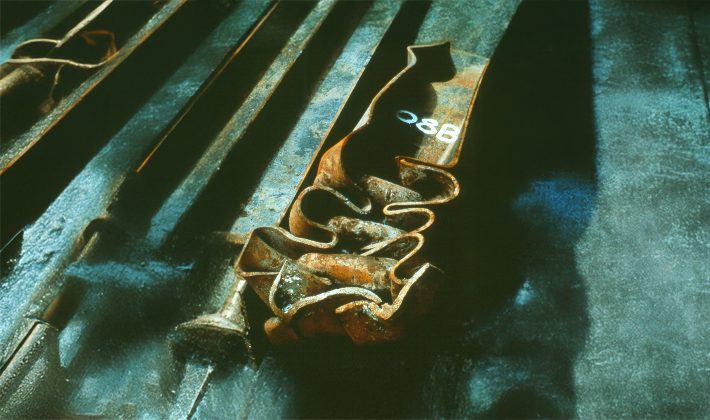
- Is the pile damaged?
- Has the pile been installed within acceptable stress limits?
- Is the driving equipment (hammer) sufficient to drive the pile to the intended load?
PDA Test (High Strain Dynamic Test)
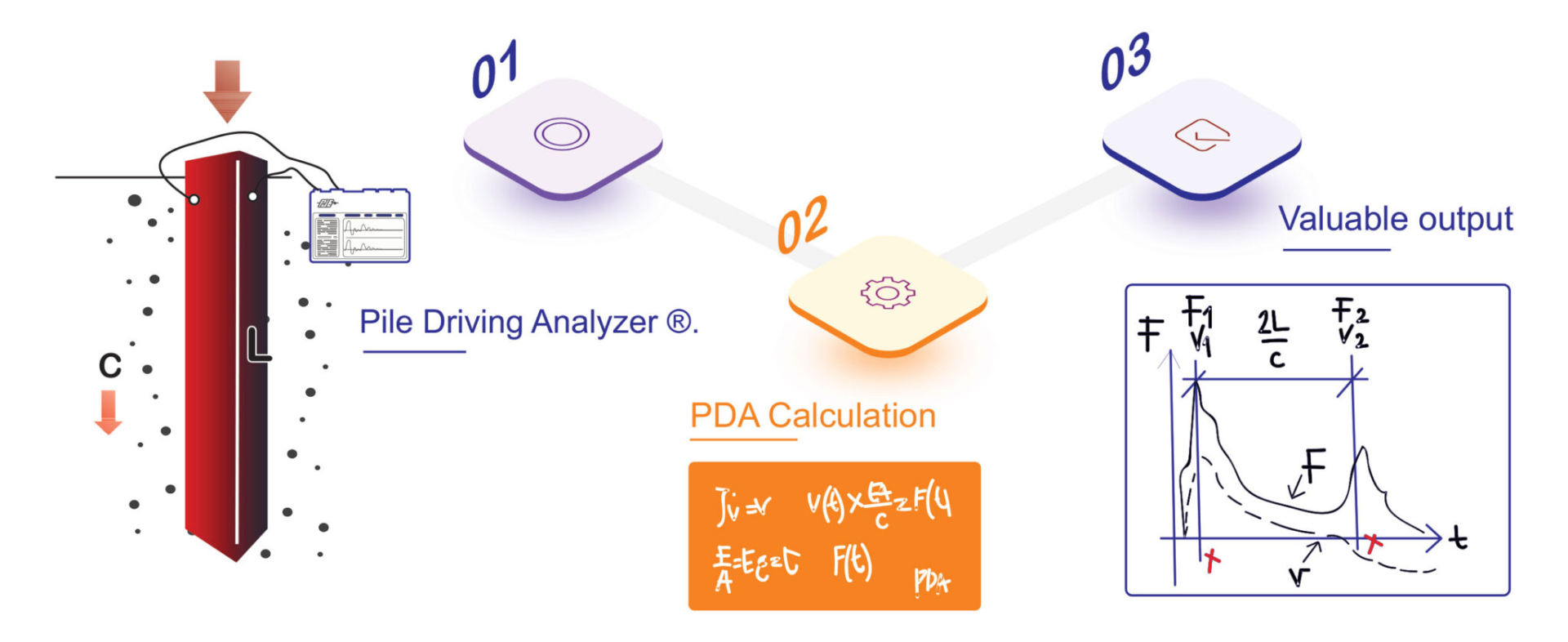
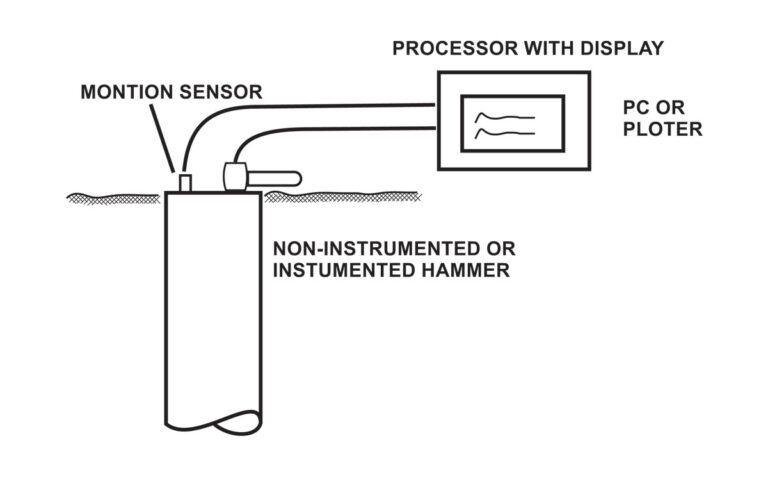
This method is based on wave propagation theory. By measuring strain and acceleration at a specific point, the pile's integrity and bearing capacity can be evaluated. PDA testing requires a relatively heavy hammer to strike the pile. The recorded force and velocity data are processed by a computer known as the Pile Driving Analyzer® (PDA®). The PDA® calculates pile bearing capacity, compression and tension stresses, and other valuable information.
P.I.T.™ (Pile Integrity Test)
A P.I.T. test does not assess bearing capacity, but using only a small handheld computer and a lightweight hammer, the Pile Integrity Tester™ can evaluate the integrity of the pile. This is a very cost-effective method for testing many piles in a very short time.
CAPWAP®
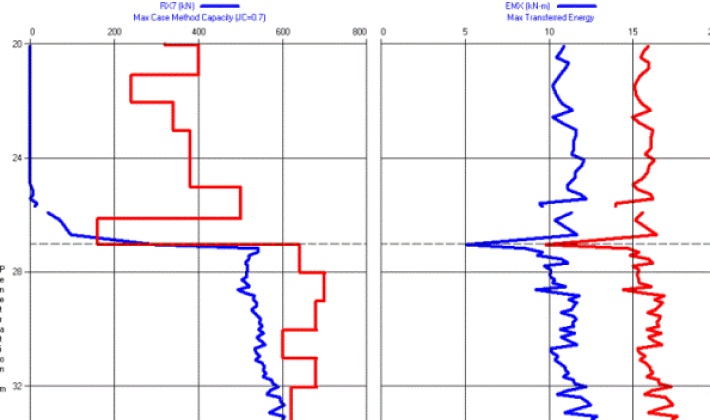
CAPWAP® is a signal-matching program that uses measured force and velocity data from a PDA test to model the pile and soil. It calculates the response and compares it to the measured response.
The analysis results include:
- Total bearing capacity and its distribution between the shaft and tip.
- Damping factors and quake (springback).
Additionally, maximum and minimum values for force, velocity, settlement, and energy are provided as a function of the pile length, as well as an estimate of static load testing.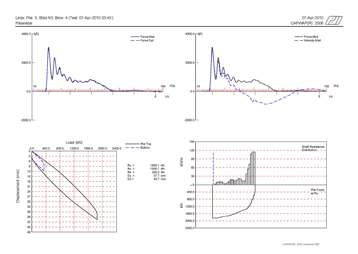
GRLWEAP™
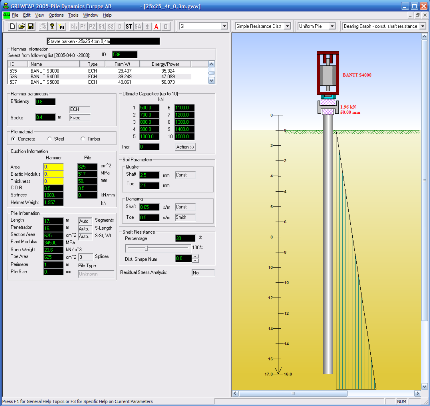
GRLWEAP™ is a one-dimensional wave equation analysis program used to simulate pile response to pile driving equipment.
GRLWEAP™ predicts driving stresses, hammer performance, and the relationship between pile bearing capacity and set per blow. This enables users to determine which hammer is likely to be sufficient and economical for a specific pile and soil condition before mobilizing the hammer to the site.
GRLWEAP™ has been used in various studies, including analyzing piles under existing buildings to assess whether the current pile foundation can support an additional story or if remedial work is needed.